Airsoft game modes: 9 formats, how they play and which to run first

TL;DR
The common airsoft game modes are team deathmatch or elimination, capture the flag, domination or king of the hill, attack and defend, VIP escort, search and destroy, search and rescue, zombies and milsim scenario ops. Short skirmish modes run 10 to 45 minutes with simple respawn rules, while milsim ops string objectives together over many hours. For a first organised day, start with short capture the flag and king of the hill rounds with timed respawns.
Key takeaways
- Nearly every mode is about removing the other side, holding a place, or protecting or recovering someone or something.
- Airsoft relies on an honor system, so good modes make honest hit calls easy.
- Capture the flag, domination and attack and defend cover most skirmish days.
- Brief the respawn rule, time limit and boundary before every round.
- Eye protection stays on in the playing area, and most minimum engagement distances are 10 feet (3 m).
On this page
Airsoft game modes are the rule sets that turn a field full of players into a game. The nine you will meet most are team deathmatch, capture the flag, domination (king of the hill), attack and defend, VIP escort, search and destroy, search and rescue, zombies and full milsim operations. Skirmish days rotate short rounds of the first few; bigger events string objectives into a scenario that can run all weekend. Below is how each one plays, how many players and how long it needs, how respawns usually work, and one tip for the organiser.
Airsoft is played in a variety of formats, including skirmishes, close quarters battle games, military simulations and historical reenactments, on indoor and outdoor fields.[1] All of them rest on one fact: airsoft pellets do not leave visible marks, so the sport relies heavily on an honor system in which players acknowledge being hit.[1] A good game mode makes honest hit calls easy and cheating pointless.
Nearly every airsoft game mode is a variation on three ideas:
- Remove the other side: team deathmatch, elimination, search and destroy.
- Take or hold a place: capture the flag, domination, king of the hill, attack and defend.
- Protect or recover a person or object: VIP escort, search and rescue, most milsim objectives. These take the longest to brief.
Bottom line: if your group learns only three modes, make them capture the flag, domination and attack and defend. Between them they fill most skirmish days.
Skirmish modes: elimination, flags and hills
These are the modes a typical Sunday skirmish rotates through. They are short, easy to brief and quick to reset between rounds.
Team deathmatch and elimination
Two teams, and the last side with players in the game wins. In elimination, one of the basic modes woodsball fields run, teams must tag every opponent without being eliminated themselves.[2] Team deathmatch usually adds a clock and a respawn pool: each side gets a set number of returns, and the first team to run out loses.
It is the simplest mode to explain to a new player, which is exactly why it gets boring after the third round.
Organiser tip: give each respawn point a marshal with a tally counter. Nobody should have to trust the other team’s arithmetic.
Capture the flag
Each team guards a flag at its base and tries to carry the other team’s flag home. Airsoft and paintball versions of capture the flag typically have no territories, and players who are hit sit out a predetermined time before returning to play.[3] That timed respawn keeps the game moving: a failed raid costs a few minutes, and the round carries on.
Organiser tip: decide before the start what happens when a flag carrier is hit. The flag either drops where they stand or goes straight back to base. Both work; deciding mid-game starts arguments.
Domination and king of the hill
King of the hill is a method of play in airsoft and woodsball paintball, in which players must either defend or capture a point of interest.[4] Domination spreads the same idea across three to five points, and a team scores for every minute it holds each one, tracked with a flag, a coloured panel or a timer box at the point.
It suits mixed-ability groups best, because there is always a point near you that needs taking or holding.
Organiser tip: space the points so that holding all of them at once is hard. If one organised squad can sit on everything, the game is decided by minute ten.
Attack and defend
In the attack and defend format, large numbers of attackers try to overrun a fixed but well-defended objective, such as a compound or large building.[2] Attackers get generous respawns and defenders get few or none, so numbers balance out the defenders’ cover. Run it twice with the sides swapped and compare times.
Organiser tip: set a hard clock. An attack with no time limit becomes a slow grind that wears everyone out before lunch.
Role and scenario modes: VIP, bomb, rescue, zombies and milsim
These modes hang the game on a person, an object or a story. They take longer to brief, and they reward teams that talk to each other.
VIP escort
In protect the VIP, a team must protect a single player while opponents try to eliminate them; other players may re-enter after being tagged, but the game ends when the VIP is tagged.[2] Give the VIP a route from one end of the field to the other and a time limit, and it becomes an escort mission. The VIP usually carries a sidearm or nothing at all, so keeping them in the game is a team job.
Organiser tip: pick a VIP who wants the role and can walk the whole route. A reluctant VIP ends the round in two minutes.
Search and destroy (the bomb game)
Milsim simulations are fictionalized scenarios with a realistic objective, which can include hostage rescue, bomb defusal or fictionalized skirmishes.[5] The skirmish version is simple: one team carries a prop “bomb” to one of two marked sites and arms it, and the other team has to disarm it before its timer runs out. Rounds are short and there are no respawns inside a round, so every hit call matters.
Organiser tip: use a prop with a loud, obvious timer and brief exactly how it is armed and disarmed. Most disputes in this mode start at the prop.
Search and rescue
One team searches a large area for a “downed pilot” (a marshal or volunteer) or a package, then brings it back to base while the other side hunts them. It plays like capture the flag stretched across a whole field, where finding the target is the first half of the game.
Organiser tip: give the search team a rough area to look in, drawn on the map. Searching is the fun part, and an exact grid point skips it.
Zombies (infection)
In the woodsball zombie format, one player starts as a zombie against all the others, and players the zombie hits turn into zombies after a set respawn time.[2] The human side shrinks, the zombie side grows, and the last few survivors make the round. It is the friendliest mode for new players and works best in CQB or in woodland after dark.
Organiser tip: mark zombies with hi-vis tape or armbands and agree exactly how a zombie tags someone before the first round.
Milsim scenario ops
Milsim strings objectives, roles and a storyline into one long game, with a chain of command, a written briefing and usually a medic or field-hospital respawn instead of a simple timer. US milsim organiser MilSim West, based in Seattle, describes its events as a 40 hour continuous light infantry simulation.[6] Club-level ops run the same shape over six to twelve hours.
Organiser tip: write the objectives down, give each side a copy, and appoint one marshal whose only job is logging which objectives were completed and when.
Running game modes on a shared live map
Most of these modes turn on two questions: where is everything, and who is where right now. Paper maps and radio calls answer that slowly. A shared live map answers it at a glance, for players and marshals alike.
This is the problem we built Tacnav for. In Tacnav, an organiser can drop capture points and flag stations as markers and draw spawn areas, boundaries and no-go zones that every session member sees live. In practice that changes a few modes:
- Domination and king of the hill: every point is a marker on everyone’s screen. Nobody wanders the woods looking for point C.
- Capture the flag and VIP escort: each squad sees the others’ live positions, so the escort knows where the flank team is before anyone asks on the radio.
- Search and rescue: the search area is a drawn zone, and a spotted opponent becomes an enemy marker the whole side can see.
- Milsim: the organiser’s hand-drawn field map can be pinned over the real map as an image overlay. The injured status then fits neatly with medic rules.
Tacnav sessions are private, so each side can run its own, and an organiser can follow a session from the web command post at app.tac-nav.com on a laptop. Players use the iPhone app or Android (request Android access). Markers and messages queue when signal drops, and location sharing stops when the session ends.
If your group already runs ATAK with a TAK Server, keep it: Tacnav is not compatible with TAK, and its case is simplicity rather than interoperability. Our plain-English guide to ATAK covers when ATAK is the better tool.
Airsoft game modes compared
Game length depends on the mode and the field. In paintball, games can last from minutes to hours, or even days in scenario play, depending on the variant played.[7] In woodsball, game length is roughly set by the size of the playing area and the number of players, and first contact generally takes five to ten minutes.[2] Scenario paintball games are generally designed either for single-day play over eight to twelve daylight hours, or for 24-hour play that is longer and more intricate.[8]
Airsoft follows the same pattern. The player counts and lengths below are our own planning numbers for a normal skirmish day, so treat them as a starting point; your site’s house rules come first.
| Mode | Players | Typical length | Respawns | Best field |
|---|---|---|---|---|
| Team deathmatch / elimination | 10 to 40 | 10 to 20 min | None, or a set pool per team | CQB or small woodland |
| Capture the flag | 16 to 60 | 20 to 30 min | Timed, at own base | Woodland with two clear ends |
| Domination / king of the hill | 12 to 80 | 20 to 45 min | Timed or rolling | Any field with 1 to 5 points |
| Attack and defend | 20 to 100+ | 30 to 60 min per side | Attackers yes, defenders few or none | Compound, village or building |
| VIP escort | 16 to 50 | 20 to 40 min | Everyone except the VIP | Woodland with a route |
| Search and destroy (bomb) | 10 to 30 | 5 to 15 min per round | None within a round | CQB or small village |
| Search and rescue | 16 to 60 | 30 to 60 min | Timed | Large woodland |
| Zombies (infection) | 15 to 60 | 10 to 20 min | Hit humans turn into zombies | CQB or woodland at night |
| Milsim scenario op | 50 to several hundred | 6 to 40+ hours | Medic or field hospital | Large mixed site |
Practical tips for organisers
In regulated paintball, games are overseen by referees or marshals who patrol the course to enforce the rules and look after player safety.[7] Airsoft sites work the same way, and objective modes need more marshals than deathmatch because every point and prop needs someone watching it. The minimum safe gear at most airsoft games includes ANSI Z87.1 eye protection, preferably fully sealed APEL-rated ballistic eyewear.[1] Maximum muzzle velocity and engagement distance rules vary between airsoft groups, and most minimum engagement distances are 10 feet (3 m).[1]
What we have learned from running these modes:
- Brief three things before every round: the respawn rule, the time limit and the boundary. Most arguments trace back to one of them.
- Mark respawn points physically, with a flag or sign that is visible from a distance, as well as on the map.
- Alternate fast and slow modes. A 15-minute deathmatch after a 45-minute domination round resets the energy.
- Brief your site’s engagement distance again before any mode that ends in close contact: CQB rounds, the bomb site, the last flag.
- Plan water and rest for anything over an hour. Scenario games wear people down faster than skirmish rounds.
- Write the rules down for any mode with a prop, a VIP or a medic rule, and hand them to the marshals.
Safety: eye protection stays on whenever you are in the playing area, including at respawn points and between rounds. Chrono every replica before play and keep a named first-aider and a medical plan for the day.
Where to start
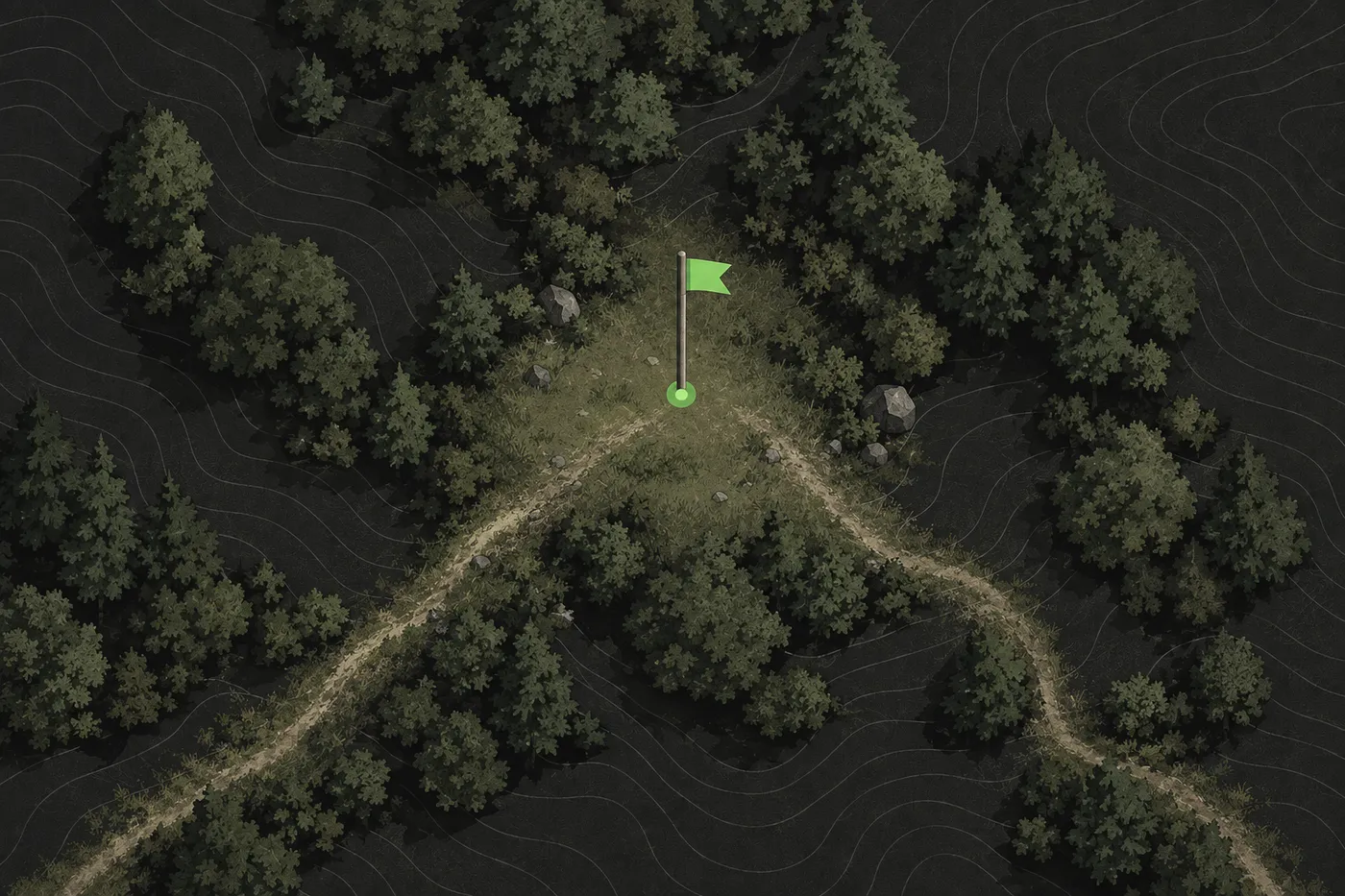
For a first organised day, run short capture the flag and king of the hill rounds with timed respawns before trying a longer scenario game. Short rounds with a visible objective teach new players the honor system, the boundaries and the respawn rule before fatigue and stakes go up.
A day plan that works for 20 to 40 players:
- Safety brief and chrono. Then one 15-minute elimination round to warm up.
- Three rounds of capture the flag, 20 minutes each, swapping ends every round.
- Lunch. Then two rounds of attack and defend with sides swapped.
- Zombies to finish, while everyone still has the energy for it.
Once your group can run that day without disputes, add a VIP escort or a bomb round, and only then try a half-day scenario. Milsim ops are the most rewarding format and the hardest to run well, so build up to them.
Disclaimer: This guide is general information for airsoft, milsim and paintball games and for people learning about publicly available TAK software, not military, tactical or legal advice. Follow your field’s and event’s safety rules, marshal instructions and local law. ATAK, iTAK, WinTAK and TAK Server belong to their respective owners; Tacnav is independent, not affiliated with the TAK Product Center, and not compatible with TAK or Cursor on Target. App features and prices change, so check the official listing before you rely on one.
Sources
- Airsoft. Wikipedia, accessed Sep 25, 2026.
- Woodsball. Wikipedia, accessed Sep 25, 2026.
- Capture the flag. Wikipedia, accessed Sep 25, 2026.
- King of the hill (game). Wikipedia, accessed Sep 25, 2026.
- MilSim. Wikipedia, accessed Sep 25, 2026.
- MILSIM WEST. MilSim West, accessed Sep 25, 2026.
- Paintball. Wikipedia, accessed Sep 25, 2026.
- Scenario paintball. Wikipedia, accessed Sep 25, 2026.
Frequently asked questions
What is the most common airsoft game mode?
Short skirmish modes such as team deathmatch or elimination, capture the flag and domination fill most skirmish days. Capture the flag, domination and attack and defend between them cover most of what a typical site runs.
How long does an airsoft game last?
Skirmish rounds typically run about 10 to 45 minutes depending on the mode and the field. Milsim scenario ops run much longer, and US organiser MilSim West describes its events as a 40 hour continuous light infantry simulation.
How do respawns work in airsoft?
It depends on the mode. In capture the flag, hit players typically sit out a set time before returning, elimination and bomb rounds usually have no respawns, and milsim often uses a medic or field-hospital respawn.
What is the best airsoft game mode for beginners?
Short capture the flag and king of the hill rounds with timed respawns. They teach new players the honor system, the boundaries and the respawn rule before a longer scenario game.
How many players do you need for an airsoft game?
Team deathmatch works with about 10 players, capture the flag and VIP escort suit roughly 16 to 60, and milsim scenario ops can run from 50 to several hundred players. These are planning numbers, and each site's house rules come first.
Tacnav
Put your whole team on one live map.
Positions, markers, routes and chat in a private session. Join with a QR code, no server to set up.